
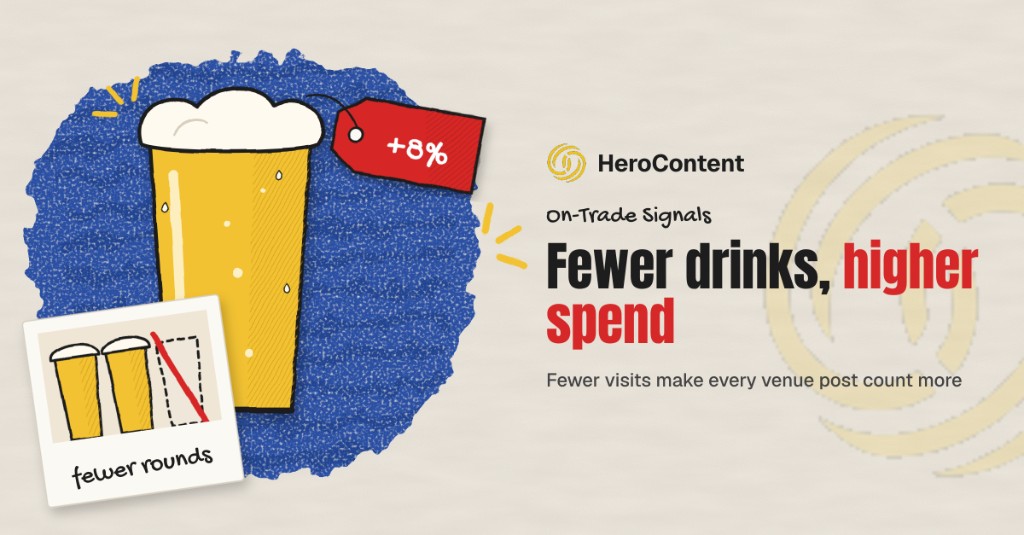
A few years ago, a typical night at the pub meant three or four rounds. Today the same group of friends is more likely to have two, choose them more carefully and pay more for each one. They are still going out. They are just doing it differently.
That shift is now showing up clearly in the numbers, and it changes what matters for drinks brands.
Volume down, value up
Heineken's 2026 Beer Report for Britain puts numbers on it. Average serves per visit have fallen by nearly 9%, while the average price of a pint has risen 8%. People are trading up to better beer and better experiences.
The result is a market that shrinks in volume and grows in value. Despite fewer drinks, beer sales in British pubs, bars and restaurants reached their highest value on record.
The same pattern holds globally. On-trade alcohol volumes worldwide were about 10% lower than five years earlier, according to Euromonitor. And across 46 countries, NIQ found that visits to bars and restaurants are down 5% year on year.
Why guests still pay more
Fewer visits does not mean less interest. NIQ's survey found that more than half of consumers are still willing to pay more for a better quality drink. They are choosing fewer, more intentional nights out, and they want each one to be worth it.
Euromonitor sees the same thing from another angle. Most people feel the squeeze on their budgets, yet a clear majority still say spending on experiences is important to them. Going out has become something people plan for.
For venues, that means each guest is worth more and every visit counts. For brands, it means each serve is worth more too.
What a smaller channel means for brands
When volume falls, the instinct is to chase it with discounts and deals. But the guests who are still going out are not looking for the cheapest round. They are looking for the right place and the right drink.
That puts more weight on the decision before the visit. A guest who goes out twice a month instead of every week chooses carefully. They look at what venues are posting, what the drinks look like and whether the place feels worth the trip. If a brand's product is part of that picture, it is part of the choice. If it is missing, the guest decides without it.
Inside the venue, the same logic applies. With fewer rounds per visit, there are fewer chances for a guest to try something new. The drink they came in already thinking about has the advantage.
This is also where premium products win or lose. A guest willing to pay more for a better drink needs a reason to believe it is better. A well-shot serve in the venue's feed, with the right glass and the label clearly visible, does part of that selling before the guest arrives. A product that never appears looks like any other option on the list.
What this means for brands
The on-trade is becoming a smaller channel that is worth more per visit. That makes visibility inside it worth more.
The brands that do well will be the ones present where guests decide: in the feeds of the venues that pour them, every week, with the product looking the way a premium serve should. Each venue post now speaks to guests who will spend more when they arrive. With fewer visits, every one of those posts counts more.