
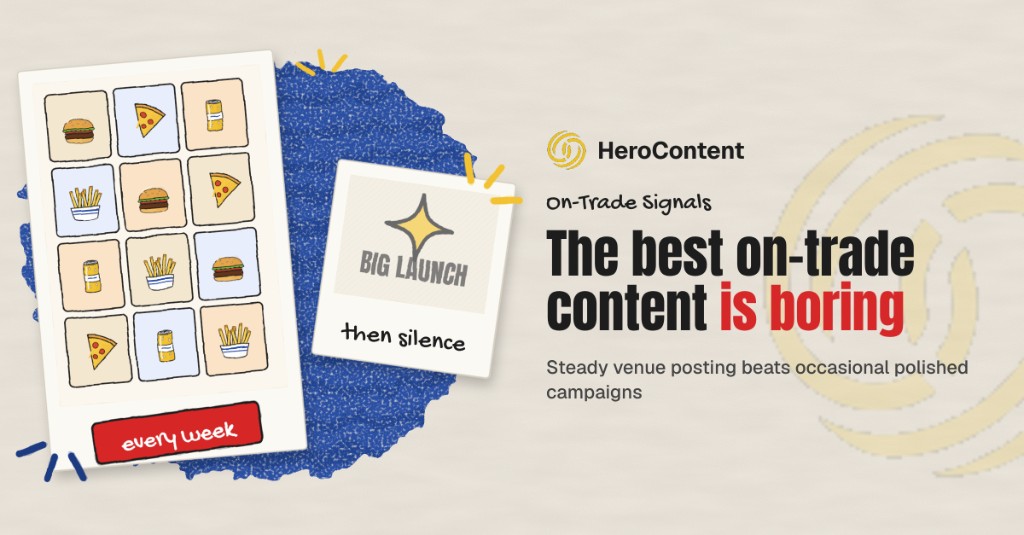
Picture two bars on the same street.
The first one launches a new cocktail menu with a proper campaign. A photographer comes in for an afternoon, the shots look great, and the venue posts eight of them in two weeks. Then the photographer leaves, the bar gets busy, and the account goes quiet until the next launch.
The second bar never runs a campaign. It just posts. A Tuesday quiz, the new keg, a plate from the kitchen, the terrace when the sun comes out. Nothing in its feed would win an award, but something new shows up every week.
Ask a brand manager which account they would rather have their product in, and most would pick the first. The data says they should pick the second.
What a hundred thousand accounts show
Buffer, the social media scheduling company, looked at more than 100,000 accounts over six months. It split them by how many of those 26 weeks they posted at least once. Accounts that posted in 20 weeks or more got about five times the engagement per post of accounts that posted in four weeks or fewer.
That is per post, not in total. The steady accounts did not win only because they posted more. Each post did better, because people had got used to seeing them.
The study found the payoff builds quickly in the first weeks of regular posting and then levels off. The lesson from the researchers was simple: posting at least weekly is the habit that matters.
Why venues post like campaigns
Most venues post the way the first bar does. Content happens when someone has time, a reason and a decent photo. That usually means openings, launches and holidays, followed by long silences.
It is not laziness. The people who run bars and restaurants are running bars and restaurants. Social media is the job that slips when the kitchen is short-staffed or the delivery is late.
For a drinks brand, this matters more than it looks. A brand that shows up in a venue's content during a two-week launch is visible for two weeks. The rest of the year, the feed that guests check before choosing where to go says nothing about it.
Polished and sporadic loses to steady
The campaign mindset comes from brand marketing, where a big moment with a big budget can carry a quarter. In a venue's feed, the rules are different.
Guests follow a local bar the way they follow a friend. They expect to see what is happening this week, not a perfect shot from March. A plain photo of tonight's special tells them the place is open, busy and worth a visit. A beautiful post from a month ago tells them nothing.
The platforms reward the same thing. An account that posts every week stays in front of the people who already follow it, and each post starts from a warmer audience. An account that goes quiet has to win that attention back every time.
What this means for brands
For brands that rely on the on-trade, the question is not how good a single piece of venue content looks. It is whether there is content at all, week after week, across every venue that carries the product.
That is a different problem from producing a launch campaign. It needs real photos from the venue, edited to a consistent standard, with the product in the shot the way it should look, and it needs them every week without depending on a busy bar manager.
AI now makes that kind of steady output possible at scale, starting from the venue's own photos and keeping the feed moving long after a campaign would have stopped.
The most valuable venue content a brand can have is the kind nobody notices being made. It is just always there.