
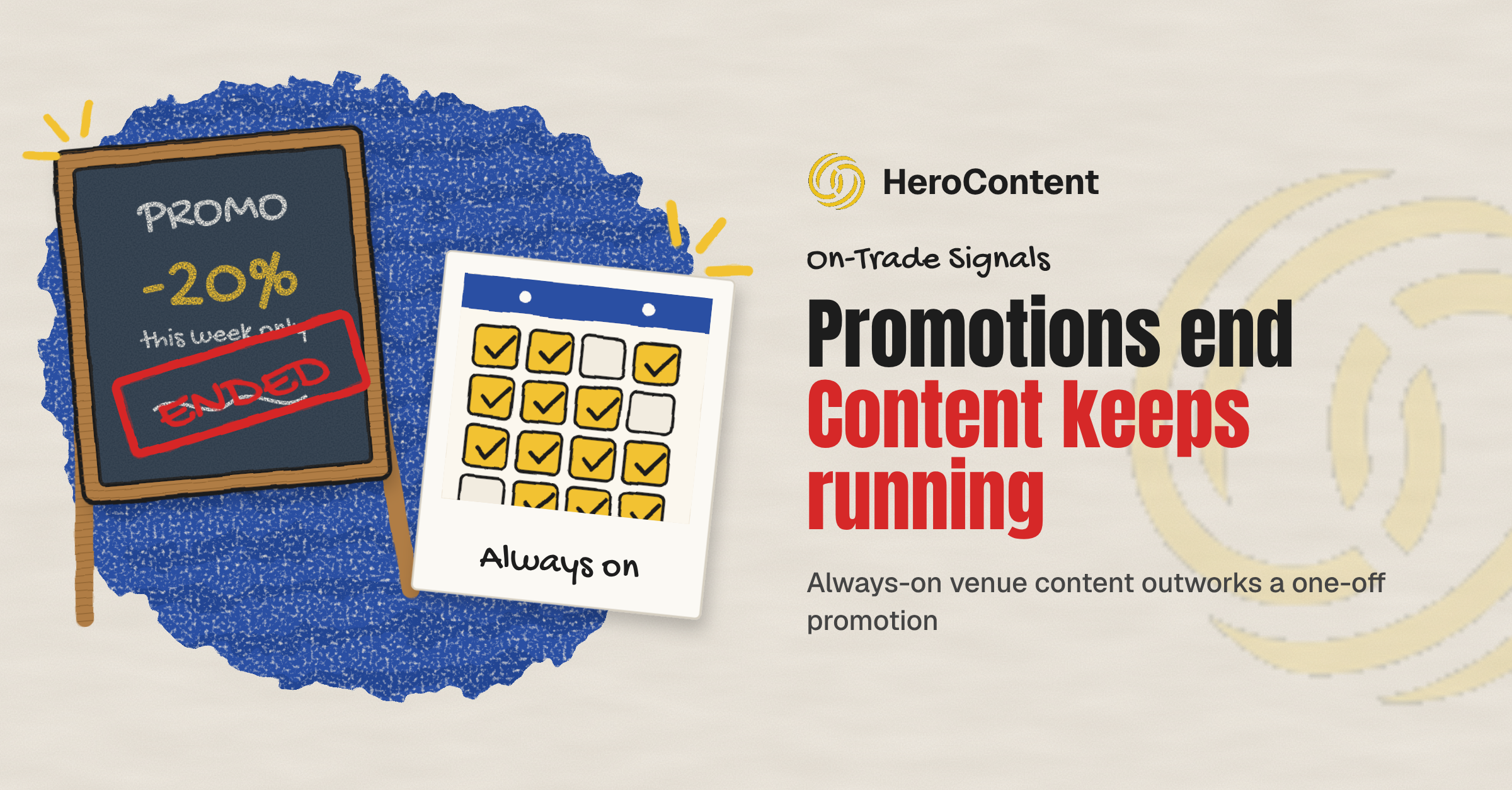
On Monday morning, a chalkboard goes up outside a neighbourhood bar. A new spirit, 20% off, this week only. The rep who set it up has photos of the board, the bottle on the back bar and a busy Friday night.
By the following Monday the board is wiped clean. The bottle is still on the shelf, but nothing outside or online says it is there. The promotion did exactly what it was paid to do, for exactly as long as it was paid for.
Every drinks brand knows this cycle. Most are still spending a large part of their budget on it.
A fifth of revenue, most of it lost
Trade promotions are one of the biggest lines in a consumer goods company's budget. McKinsey estimates that companies worldwide put about a fifth of their revenue into trade promotions every year.
The same analysis, drawing on Nielsen data, found that most of those promotions lost money. Globally it was close to six in ten. In the US it was more than seven in ten.
The figures are a few years old, but the logic has not changed. A promotion buys a short lift. McKinsey's own conclusion is that promotions on their own cannot generate long-term growth, because they rarely bring in new customers or change habits.
Why the effect stops when the budget does
A promotion is built to end. Its job is to create a reason to buy now, and the reason disappears on the last day.
In the on-trade the problem is sharper. A discount in a bar is seen mostly by people who are already inside. Guests deciding where to go tonight never see the chalkboard. And once the deal ends, there is nothing left that keeps the product in front of anyone.
So brands run the next promotion, and the one after that. Each one has to start from zero.
There is a quieter cost as well. Guests who bought at a discount learn to wait for the next one, and venues learn to expect a brand's support only in short bursts. Neither habit helps the brand the rest of the year.
What keeps working after the budget is gone
Content works differently. A post from a venue showing the brand's drink on the bar, in a guest's hand or next to tonight's special keeps doing its job long after the day it went up. It sits in the venue's feed, where guests look before they choose where to go.
Run that every week and it compounds. Each post adds to a body of content that keeps the product visible to the venue's followers, not only to the people already at the bar.
None of this replaces a well-timed promotion. A deal can still be the right tool for a launch or a slow month. The difference is what is left when it ends.
What this means for brands
The question for a trade marketing budget is not only how much lift a promotion delivers in its week. It is what the brand still has in each venue a month later.
Shifting even part of that spend into ongoing venue content changes the answer. Instead of a burst that ends on a fixed date, the brand gets a steady presence in the feeds of the venues that pour it, built from real photos of those venues and kept going week after week with AI.
Promotions end when the budget does. Content keeps running.